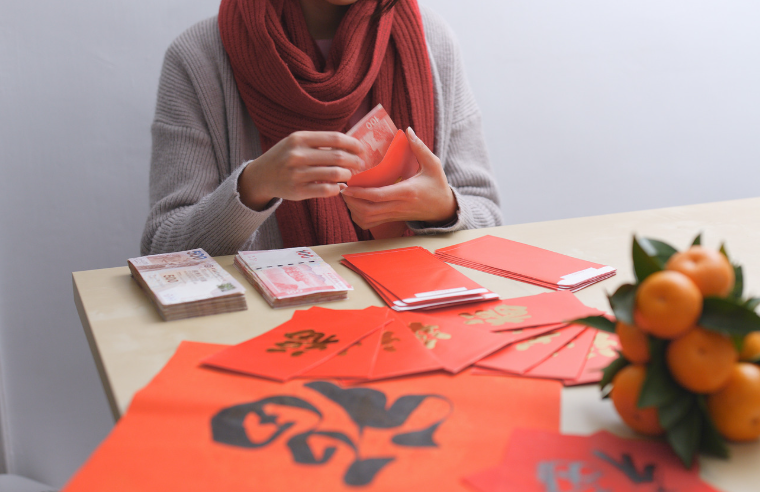
Red packets or hongbao, are an integral part of celebrating the Lunar New Year in Singapore. However, the tradition goes beyond simply giving and receiving money — some customs and nuances make this practice truly meaningful. Here are five key red packet traditions in Singapore that highlight the blend of culture, family, and community.
1. Giving Red Packets to Younger Generations
One of the most cherished traditions is the giving of red packets from elders to younger family members. This practice symbolises the transfer of good fortune, blessings, and protection. Typically, parents, grandparents, and married couples will prepare red packets for children, nieces, nephews, and younger siblings.
The amount inside can vary, but it is usually an even number as odd numbers are considered inauspicious. This tradition strengthens family bonds and allows elders to pass on their best wishes for health and prosperity.
2. Exchanging Red Packets Among Married Couples and Friends
In Singapore, red packets are not just reserved for children. It’s also customary for married couples to exchange red packets with each other, symbolising the sharing of blessings and mutual prosperity.
It is common for friends to exchange hongbao as a gesture of goodwill, especially if they have close ties. However, single adults or those who are not yet married do not typically give red packets, as it is traditionally seen as a role reserved for those who have reached a certain life milestone.
3. Giving Red Packets to Employees
During the Lunar New Year season, many employers in Singapore extend the tradition to their employees by giving them red packets as a token of appreciation. This gesture acknowledges the hard work of staff and is a way to wish them success in the upcoming year.
In some cases, this also applies to service providers like cleaners, security guards, and regular delivery personnel. It’s a practice that reflects the culture of respect and gratitude, reinforcing the community spirit during the festive period.
4. The Art of Presenting and Receiving Red Packets
In Singapore, the way red packets are given and received is just as important as their contents. When presenting a red packet, it’s customary to do so with both hands as a sign of respect. The recipient should also accept it with both hands, accompanied by a polite expression of gratitude. It is also considered impolite to open the red packet in front of the giver, as it may come off as greedy or disrespectful.
Another tradition is to give red packets at an appropriate time, typically during family gatherings or when visiting relatives’ homes. Timing is essential, as it is believed that giving a red packet too early may bring bad luck, while giving it too late may be seen as a lack of sincerity.
Conclusion
The tradition of giving red packets in Singapore goes beyond the simple act of exchanging money. It reflects the values of respect, gratitude, and goodwill that are deeply ingrained in the culture. Each red packet is a heartfelt expression of well-wishes, strengthening the bonds among family, friends, and community. As the tradition continues to evolve, it remains a cherished way to spread joy and blessings in Singapore’s multicultural society.